No.19 Electronic Information Industry Park, Anfeng Town, Dongtai City, Jiangsu,China WhatsApp: +86 19941574218
 更新时间:2025-12-12 09:56:44
 点击次数:5
1. Core Application Scenarios
Heavy-Duty Component Handling: As a Belgian local enterprise, our commercial vehicle chassis handling solution customized for a factory in Belgium primarily relies on the heavy-duty adaptability of Polyurethane-Coated Wheels. The 92 Shore A hardness coating is chemically bonded firmly to the cast iron wheel core (no risk of debonding). Coupled with a squared twin-wheel structure, this enables a single wheel to achieve a dynamic load capacity of 2 metric tons, supporting the entire machine for a total of 10 metric tons, easily adapting to the transport of 5-ton truck chassis. Compared to traditional rubber wheels, the polyurethane coating's wear resistance is 3-5 times higher, preventing uneven force distribution caused by wheel surface wear during heavy chassis transport, thus aligning with European automotive manufacturing precision standards.
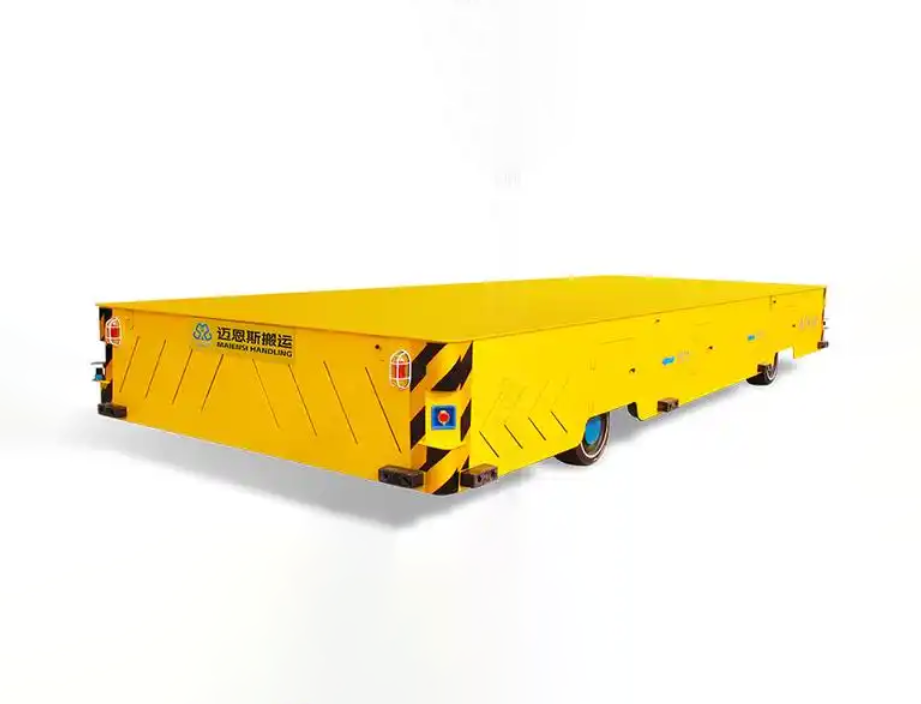
Flexible Production Line Adaptation: In a multi-model mixed-flow production line at a Belgian factory, the low-resistance characteristic of the polyurethane-coated wheels becomes a critical support. The coating's high resilience (rebound rate exceeding 60%) reduces rolling resistance by 30%. Combined with the reverse rotation design of the twin wheels, the AGV can maneuver flexibly through narrow 3-meter workshop aisles, perfectly adapting to a high production pace of 150 seconds per vehicle. Simultaneously, the operating noise of the coated wheels is 20-25 dB (A) lower than metal wheels, improving the workshop environment and accommodating the flexible production needs of seamless switching between multiple vehicle models.
Cross-border Automotive Logistics Adaptation: Leveraging the logistics scenarios of the Port of Antwerp-Bruges in Belgium, the polyurethane-coated wheels' advantages in weather resistance and wear resistance are highlighted. The wide temperature adaptability range of $-40an cope with extreme outdoor port climates. The coating's wear resistance is more than 7 times that of ordinary steel, easily handling complex road conditions like gravel and slopes, solving the long-distance unmanned transport of 10-ton truck frames, replacing the traditional forklift + manual mode, and boosting the synergy of the European automotive supply chain.
2. Application Value Highlights
The high-strength characteristic of polyurethane-coated wheels (tensile strength and tear strength are 1.5-2 times that of rubber) supports a 2-ton dynamic load per wheel, increasing the carrying efficiency by 40% compared to traditional AGVs. This reduces congestion from cross-operations in the factory, fitting the lean manufacturing requirements.
The low rolling resistance and high wear resistance design reduce AGV energy consumption by 15%. Furthermore, the coated wheels have a long maintenance-free cycle of 1-2 years, coupled with an ultra-long service life of 5 years, significantly lowering factory maintenance costs. This aligns with Belgium's green energy strategy and contributes to carbon neutrality goals.
The coated wheels can be customized with features like anti-static and oil/stain resistance. In the future, they can be adapted for new energy vehicle battery pack handling, further expanding their application scenarios in the automotive new energy sector.
3. Core Value Linkage of the Case Study
The core breakthrough in this case study lies in the deep integration of the material advantages of polyurethane-coated wheels with Belgian's heavy-duty structural design. By leveraging the coating's characteristics of wear resistance, high load capacity, and low noise, the solution resolves the core contradiction in the automotive sector.
Mailun is a Chinese supplier specializing in custom wheels for industrial automation production equipment used in food processing, automotive manufacturing, semiconductor cleanrooms, and other industries. Contact us for more information.