
In food processing and manufacturing environments, hygiene, efficiency, and safety are paramount. From raw material transport carts and meat hanging racks to finished product distribution trolleys, the smooth operation of this equipment depends on a seemingly small but crucial component: casters. However, not all industrial casters can withstand the harsh conditions of a food processing plant. Choosing the wrong casters can lead to equipment jams, damaged flooring, and even cross-contamination, directly threatening food safety. So, what exactly are the best wheels for the food processing industry? This guide provides a detailed breakdown.
Special Requirements for Wheels in Food Processing Environments
Before selecting specific types, we must define the "three thresholds" that food-grade wheels must meet:
Ultimate Hygiene Standards: Must have no sanitary dead zones; surfaces must be smooth and non-porous to prevent bacterial growth.
Corrosion and Chemical Resistance: Must withstand frequent exposure to water, strong acidic/alkaline cleaning agents, and high-temperature steam.
High Load Capacity and Low Noise: Food processing often involves heavy loads (e.g., meat, flour barrels). The load wheels must remain smooth under heavy pressure without generating excessive noise in the workspace.
Advantages of High-Performance Polyurethane Tread Wheels and Stainless Steel Casters
Combining these requirements, the industry-recognized ideal configuration is: Stainless Steel Caster Rigs + Polyurethane (PU) Treads.
1. The Bracket of Choice: 304/316 Stainless Steel Casters
In food processing plants, standard zinc-plated iron brackets will rust quickly. Stainless steel casters (especially 316 medical-grade stainless steel) are the gold standard. They are naturally immune to cleaning agents and damp environments, feature smooth surfaces that are easy to hose down, and do not harbor dirt.
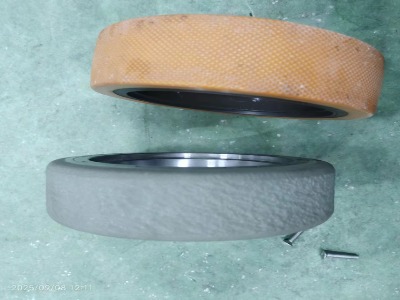
2. The Tread of Choice: Polyurethane (PU) Wheels
Why do polyurethane wheels outperform rubber and nylon in the food industry?
Anti-static and Non-marking: High-quality polyurethane wheels do not leave black scuffs or stains on epoxy floors, which is critical for maintaining cleanrooms.
Corrosion Resistance: Unlike rubber wheels, which tend to absorb water, age prematurely, or soften when exposed to grease, polyurethane wheels have superior resistance to oils, water, and most chemical cleaning agents.
Excellent Dynamic Ratio: As load-bearing wheels, polyurethane provides high load capacity while maintaining the right amount of elasticity, making it effortless to push heavy carts.
3. Special Heavy-Duty Scenarios: Vulkollan® Wheels
For extreme heavy-load scenarios like slaughterhouses or heavy dough mixers, standard polyurethane wheels may not suffice. Here, Vulkollan wheels—the "Rolls-Royce" of industrial casters—come into play. They offer more than double the load capacity of standard PU, along with excellent cut and high-temperature resistance.
Wheels Types to Avoid for Food Safety Compliance
To ensure food safety, the following caster types should be avoided in core food processing areas:
Nylon Wheels: While they have high load capacity and wear resistance, their friction decreases sharply in damp environments (prone to slipping). Furthermore, they can splinter under heavy pressure, creating plastic debris—a major food safety hazard.
Cast Iron Wheels: Highly prone to rust; strictly prohibited in food processing zones.
Standard Rubber Wheels: While they offer good shock absorption, they tend to degrade, leave marks, and swell when exposed to edible or animal fats over long periods.
Advanced Selection Achieving International Hygiene Standards
If you aim to meet top-tier international hygiene certifications (such as FDA or EHEDG), consider these details when purchasing swivel casters and rigid casters:
Anti-Microbial Technology: Advanced polyurethane wheels are now manufactured with antimicrobial additives (e.g., silver ion technology). These antimicrobial wheels actively inhibit the growth of Salmonella, E. coli, and other bacteria on the wheel surface, providing a double layer of protection for food safety.
Fully Sealed Swivel Caster Design: The bearing areas of standard swivel casters are magnets for dirt and water. Food-grade casters must feature fully sealed dust covers or even press-in non-contact sealed bearings to ensure that water and contaminants cannot enter the wheel assembly during high-pressure washdowns.
Twin-Wheel Structure: For space-constrained food production lines, twin-wheel casters are an excellent choice. By utilizing two smaller wheels in parallel, you not only improve load distribution but also significantly reduce the turning radius, allowing carts to navigate crowded cold storage rooms or production lines with ease.
In the food processing industry, a wheel is far more than just a "moving part"—it is directly tied to operational efficiency, floor maintenance costs, and the absolute core of food safety. Investing in high-quality stainless steel casters paired with polyurethane wheels may seem like a higher upfront cost, but in the long run, it saves countless hours in maintenance, reduces flooring restoration expenses, and mitigates potential food safety compliance risks.