
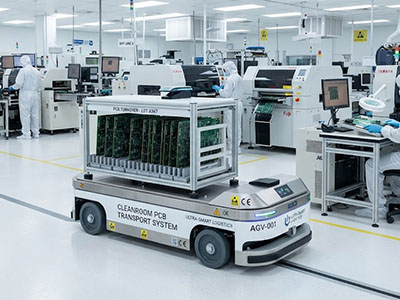
Project Background: The "Extreme Requirements" of Japanese Lean Production
The project is located at a core vehicle assembly plant in Aichi Prefecture, Japan. As the birthplace of the Toyota Production System (TPS), this facility demands near-perfect reliability from its internal logistics (Intralogistics) to ensure zero-defect operations.
Equipment Specifications
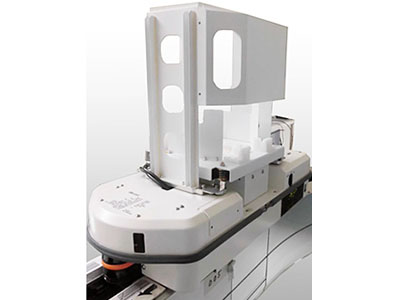
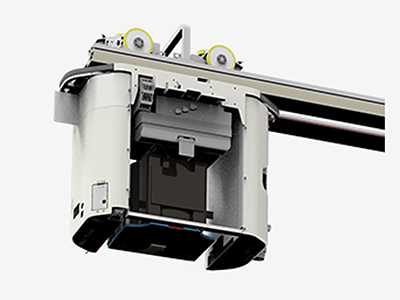
Equipment Type: High-speed Double-Mast Storage and Retrieval Machines (SRM).
Operational Environment: 24/7 fully automated operation with an average throughput of 45 cycles per hour.
Physical Requirements: Load capacity P≥2000kg; Travel speed v=300m/min.
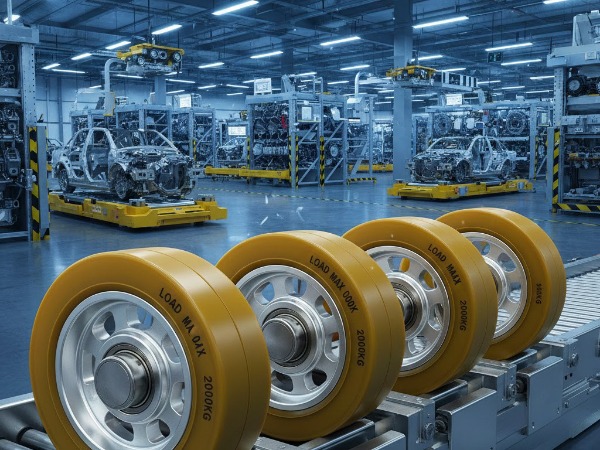
Critical Pain Points
Thermal Meltdown via Internal Heat Build-up: The SRMs accelerate and brake frequently within 100-meter aisles. Standard polyurethane wheels suffer from high Hysteresis Loss, causing heat to accumulate internally. This leads to material softening or catastrophic delamination (chunking).
Positioning Accuracy Drift: As wheels wear down, micro-changes in wheel diameter cause cumulative errors in laser distance sensors, compromising the precision of pallet placement.
Cost of Downtime: Under the "Just-in-Time" (JIT) model, any AS/RS failure can starve the downstream assembly line of parts within 15 minutes, with downtime losses estimated at millions of Yen per incident.
Solution: Advanced NDI-based Polyurethane Technology
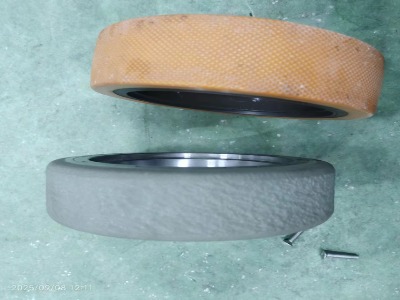
To address these challenges, we implemented high-performance polyurethane wheels based on NDI (1.5-Naphthalene Diisocyanate) prepolymer technology (comparable to the German Vulkollan® standard).
Material Science Advantages
Ultra-Low Heat Generation: The NDI molecular structure is highly regular, resulting in minimal internal friction during dynamic compression. Even under high-frequency reciprocating motion, the core temperature remains 15∘C to 20∘C lower than traditional MDI materials.
Superior Compression Set Resistance: When the SRM is parked overnight or for maintenance, the wheels remain under static load. This high-performance material ensures no "Flat Spots" develop, guaranteeing smooth movement upon restart.
Mechanical Engineering Optimization
Dual-Angle Bonding Technology: The wheel core surface undergoes specialized cross-threaded grooving and is treated with high-grade chemical bonding agents to ensure the bond strength exceeds the tear strength of the polyurethane itself.
Precision Dynamic Balancing: Every drive wheel is calibrated to a G2.5 dynamic balance grade, eliminating vibrations even at high speeds of 300m/min.
Performance Results & ROI Evaluation
After 18 months of on-site tracking, the solution demonstrated clear superiority:
Metric | Conventional PU (MDI) | High-Performance NDI | Improvement |
Dynamic Load Capacity | 120N/mm2 | 180N/mm2 | +50% |
Rolling Resistance Coefficient | 0.022 | 0.011 | -50% |
Service Life Expectancy | ~12.000 km | ~45.000 km | 3.75x |
Operating Temp Rise | 52∘C (Alert Level) | 31∘C (Safe Zone) | 40% Better Heat Dissipation |
Total Cost of Ownership (TCO) Analysis
While the initial purchase price of NDI wheels is approximately 40% higher than standard wheels, the long-term benefits are substantial:
Energy Savings: The reduction in rolling resistance decreased motor energy consumption by approximately 1200kWh per unit annually.
Labor Efficiency: Eliminated three unscheduled replacement cycles and subsequent equipment re-calibrations.
Intangible Value: The risk of production line shutdowns due to "wheel delamination" was entirely mitigated—a value that far outweighs the component cost.
Conclusion
This case demonstrates that in the era of smart automotive manufacturing, upgrading fundamental components—such as polyurethane wheels—is the bedrock of supporting advanced logistics algorithms and hardware efficiency.
Feedback from the Client's Engineering Team: "Previously, we viewed wheels as simple consumables. Now, we recognize them as a 'safety valve' that ensures the 'heartbeat' of our warehouse remains steady. The low friction and durability provide the physical assurance required for our lights-out manufacturing goals." Contact us!